
Seven days to two.
The construction draw and fund control rebuild that CtrlCap's method is built on. This work was done in my own operating role, on portfolios I was accountable for.
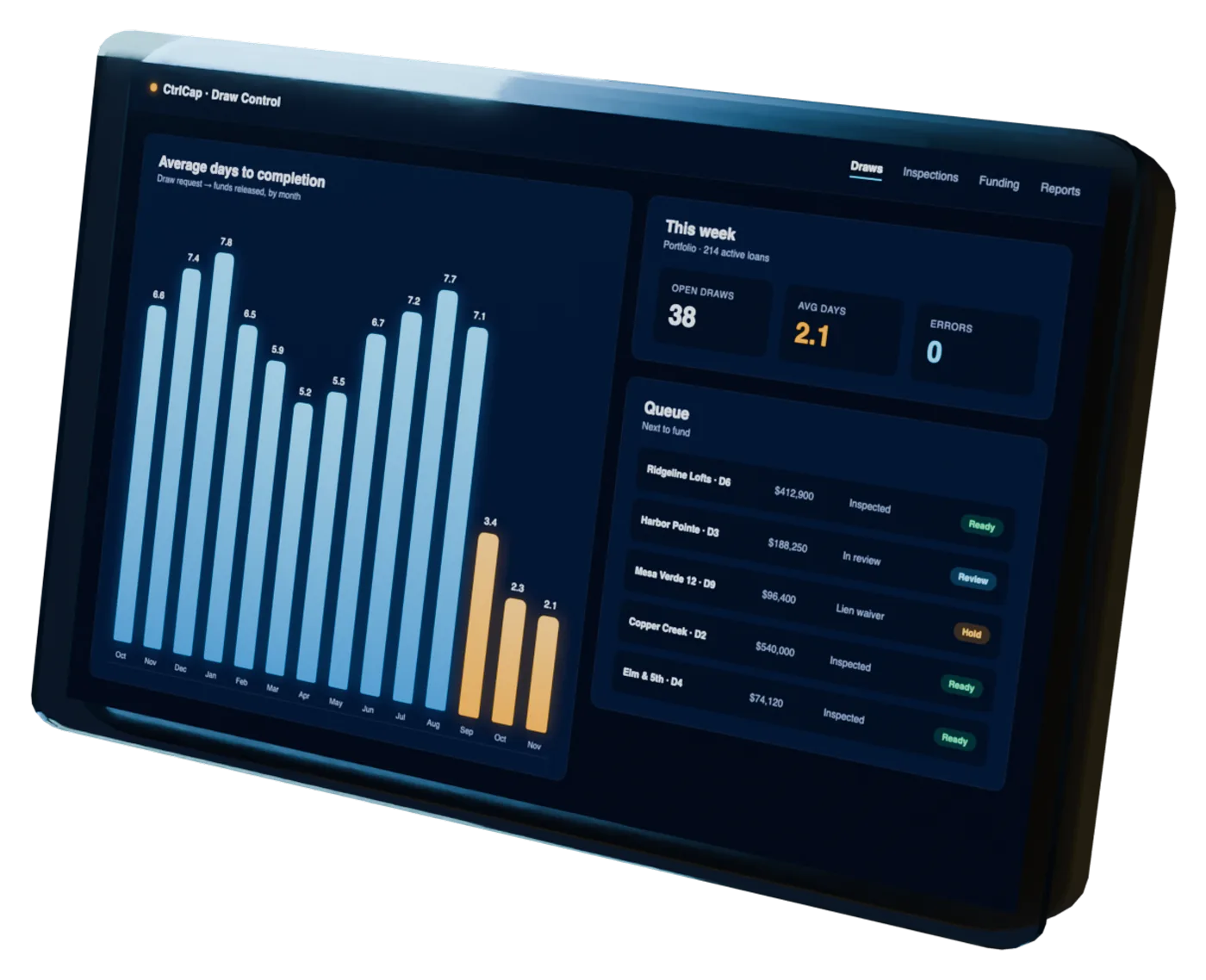
This is not a client case study. It is the work I did in the seat, and it is the reason I am comfortable selling a fixed 90-day scope.
Plenty of consultants can show you a client logo. This page shows the process instead, because that is the honest version and because it is the part a competitor cannot copy. Every number below comes from operations I ran.
What the process looked like
Construction draws on a rehab portfolio move through more hands than people outside lending expect. A borrower submits a request. Someone checks it against the approved budget. An inspection gets ordered and comes back. Fund control validates the work in place, applies retainage, and approves a disbursement amount. Accounting funds it. Somewhere in there, the borrower calls to ask where their money is.
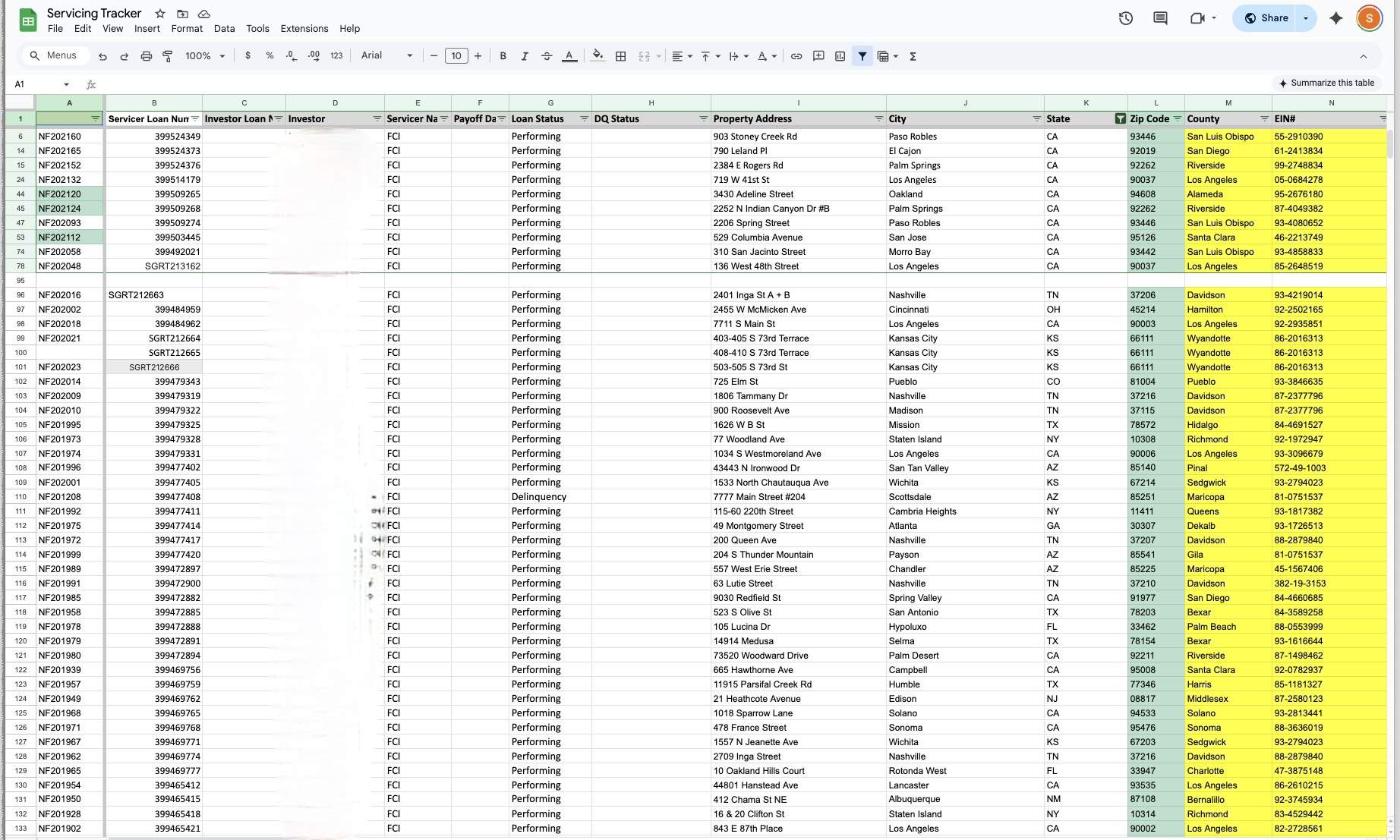
All of that lived in spreadsheets. One workbook per portfolio, tabs per property, formulas layered by whoever touched it last. The status of any given draw existed in exactly one place: the head of the person handling it.
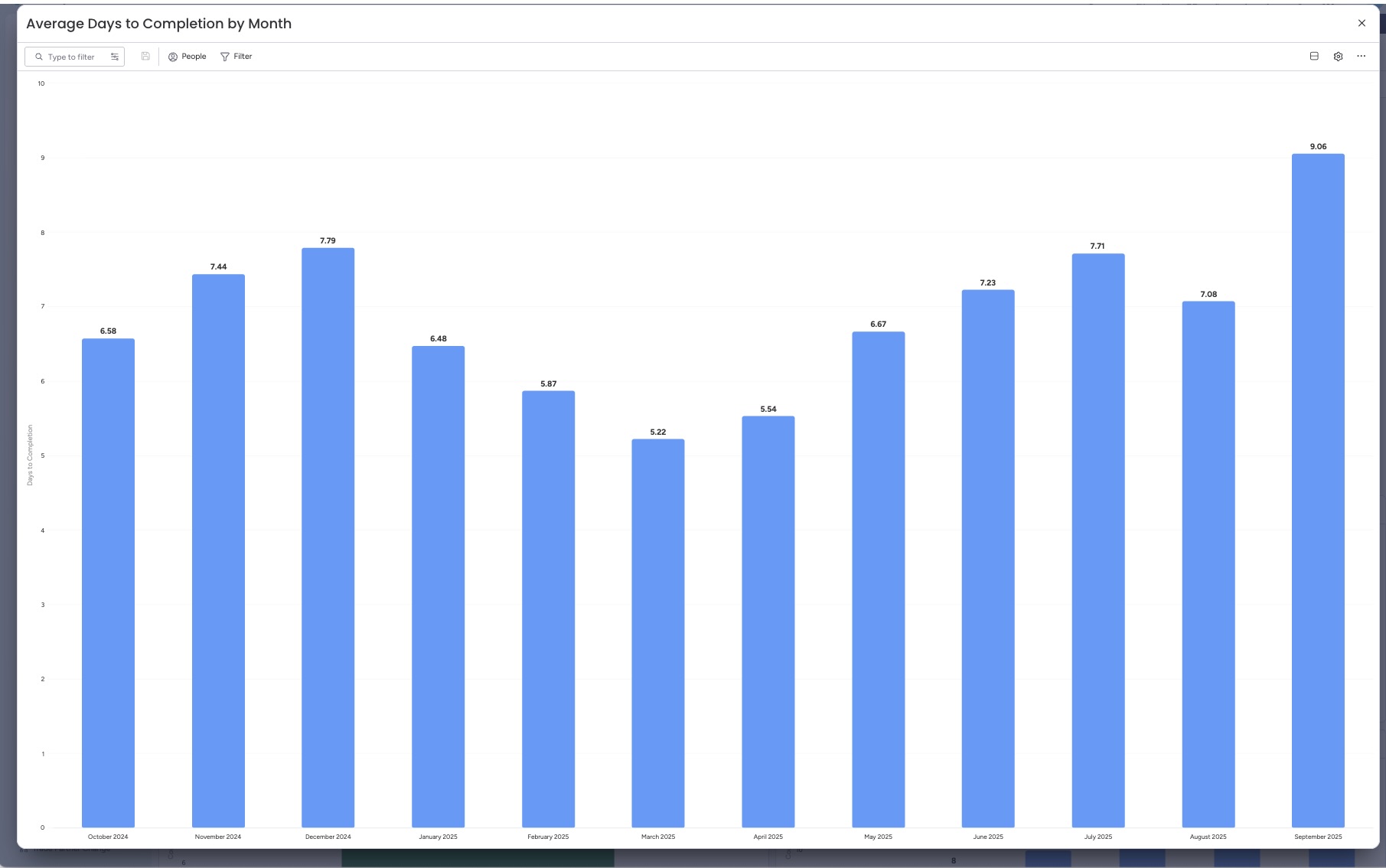
The failure mode was not dramatic. Nothing exploded. Reimbursements just took about seven days, reconciliation errors showed up in the numbers often enough to be normal, and every question about a draw's status generated an email.
What I changed
The instinct in this situation is to build a better spreadsheet. That is the trap. A better spreadsheet still puts the state of the process in a document instead of a system, and it still depends on a person remembering to update it.
The fix was to give every draw an identity and a lifecycle. One record per draw, moving through defined stages, each with an owner and a clock. Specifically:
- Structured records replaced tabs. A draw became an object with a budget line, an inspection status, an approval state, and a disbursement amount, not a row that meant something different in each workbook.
- Approval routing replaced email. When a draw cleared inspection it moved to fund control automatically. When fund control approved it, accounting saw it without being told.
- Retainage and holdback logic moved into the system. The calculation stopped being a formula one person maintained and became a rule the process enforced.
- Aging became visible. Any draw sitting past the service standard surfaced on its own instead of waiting for someone to notice.
- Reconciliation stopped being manual. Because the numbers were captured once at the point of approval, there was nothing left to rekey, and therefore nothing left to mistype.
What it produced
| Measure | Before | After |
|---|---|---|
| Draw reimbursement cycle | 7 days | 2 days |
| Manual reconciliation errors | Recurring | Eliminated |
| Fund control throughput | Baseline | Doubled |
| Draw status visibility | Ask the person handling it | Visible to everyone, live |
The seven-to-two number is the one borrowers felt. The throughput number is the one the business felt, because the same fund control team could carry twice the draw volume without adding a person. The error number mattered most, since a reconciliation error in fund control is not a typo, it is money moving incorrectly.
Nobody was made to work faster. The waiting, the rekeying, and the asking were removed.
Why this is the method
Everything CtrlCap sells is this rebuild, generalized and delivered on Monday.com. The stages change depending on whether the work is draws, pipeline, or servicing exceptions. The shape does not:
- Map the process as it actually runs, including the exceptions nobody wrote down.
- Give every unit of work an identity, an owner, and a clock.
- Move the rules out of people's heads and into the system.
- Make aging and status visible so problems surface before they escalate.
- Train the team to change it themselves, then leave.
That last step is the one most consultants skip, because a client who cannot maintain their own system is a client who keeps paying. Better that you stop needing the help and tell someone why.
What this would look like for you
If your draw log is a spreadsheet, your pipeline status is a Friday email, or your investor reporting is a quarterly rebuild, the starting point is the same conversation: what does the process actually do today, including the parts that only work because a specific person is paying attention.
Engagements start at $15,000 and run a fixed 90 days. Discovery can be scoped separately if you want to start smaller, and you keep the process map either way.